Lined up. Sidelined
Temporary exhibition from 11.09.2026 to 15.11.2026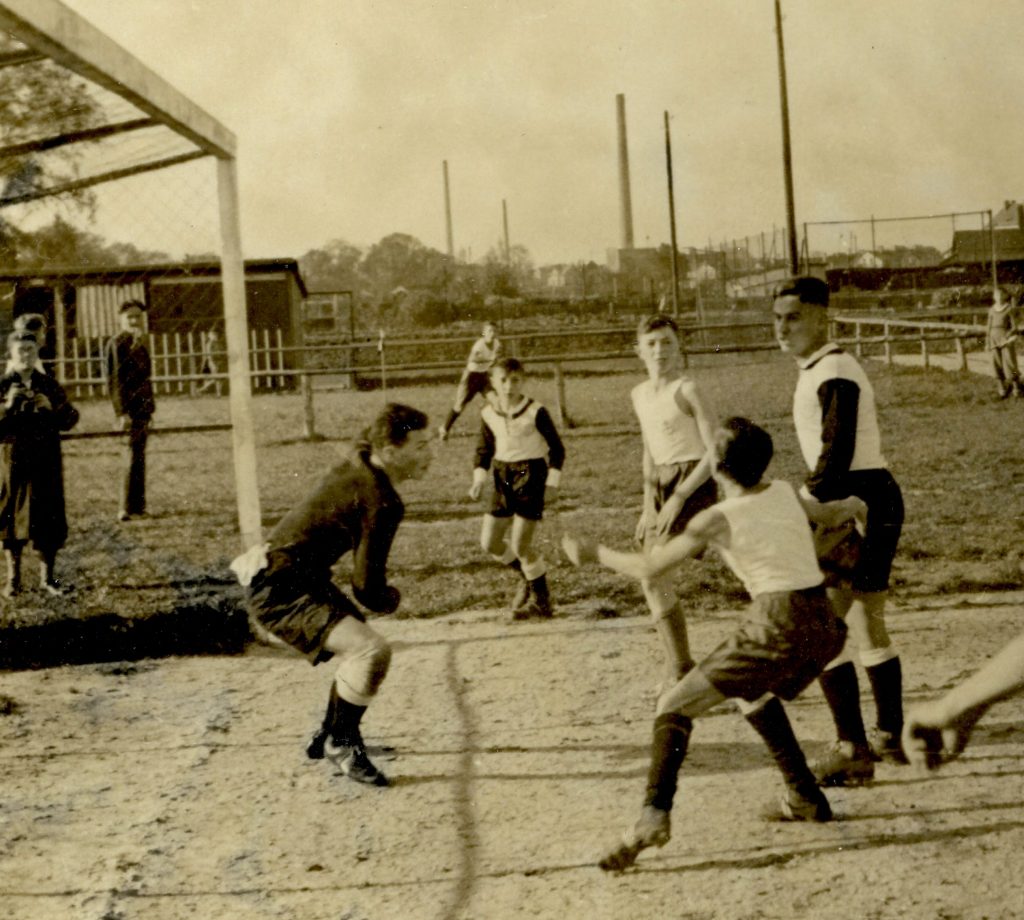
Jewish sporting Life in Augsburg and Swabia
Sports have always had the power to bring people together. Beyond competition and physical exercise, sports clubs serve as places for fostering solidarity, team spirit, and core values like respect and fairness. However, even within the sporting world, people are excluded and discriminated against.
The exhibition, developed by the Jewish Museum Augsburg Swabia in collaboration with the soccer club FC Augsburg and students from the University of Augsburg, presents the life stories of Jewish athletes from Swabia.
Throughout the 19th and early 20th centuries, Jewish people were an integral part of social and sporting life in many communities. The Nazi rise to power in 1933 marked a profound turning point for the world of sports. Jewish athletes were systematically expelled from their clubs, though some found refuge in a unique alternative: the Private Tennis Society of Augsburg. Even those who managed to flee abroad continued to cherish the sense of community they had experienced there, often recalling it decades later.
Following World War II, there was initially little critical examination of the histories of sports clubs. To this day, antisemitism and racism in sports remain major challenges. A culture of remembrance, critical engagement with the Nazi era, and a commitment to combating discrimination are therefore important priorities for many sports clubs, including FC Augsburg.
Public guided tours
Sun, September 20 | 4 p.m.
Tue, October 13, 2026 | 4 p.m.
Sun, November 15, 2026 | 4 p.m.
Guided tours are free of charge. Guided tours are in German.
For organizational reasons, registration for the guided tours is required at empfang@jmaugsburg.de or by phone at +49 (0)821-51 36 11.