A Torah curtain survives the pogrom of 1938
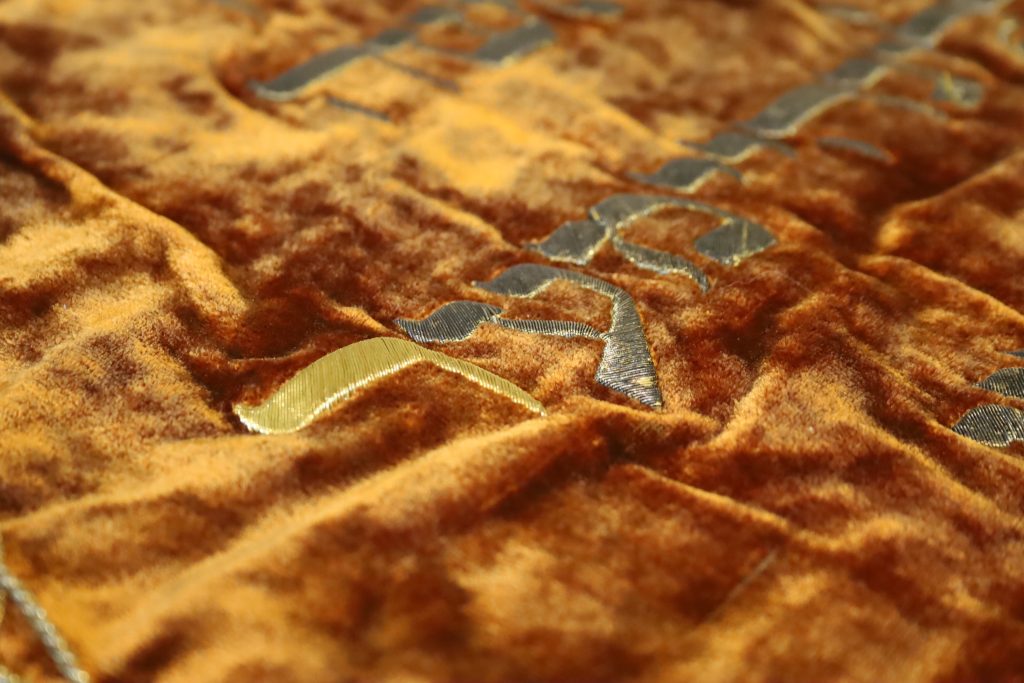
Provenance research reveals the journey of a rare historical Torah curtain
Numerous traces of Jewish life in Bavarian Swabia were wiped out during the pogrom night of 1938. Not only many synagogues in Bavarian Swabia were destroyed, but also countless ritual objects that were kept in the places of worship. One of the few objects that survived the November pogroms is a Torah curtain from Altenstadt a. d. Iller. Today, it is part of the collection of the Jewish Museum Augsburg Swabia. Its history, which dates back over 120 years, was reconstructed as part of a research project, and the valuable textile was restored this year.
Provenance research investigates the origin of cultural assets and their journey to museums. Provenance research is particularly important for our museum, as each of these objects tells the story of the once flourishing Jewish life that was violently eradicated in 1938. By researching and preserving the stories behind these objects, we are giving them back their place in the collective memory.
At the Jewish Museum Augsburg Swabia, historian Christian Porzelt is currently systematically researching historical textiles. As part of a project funded by the German Center for Lost Cultural Property and the Bavarian State Office for non-state museums, he examined, among other things, a Torah curtain whose place of origin was as unknown as the path by which the object found its way into the Jewish Museum.
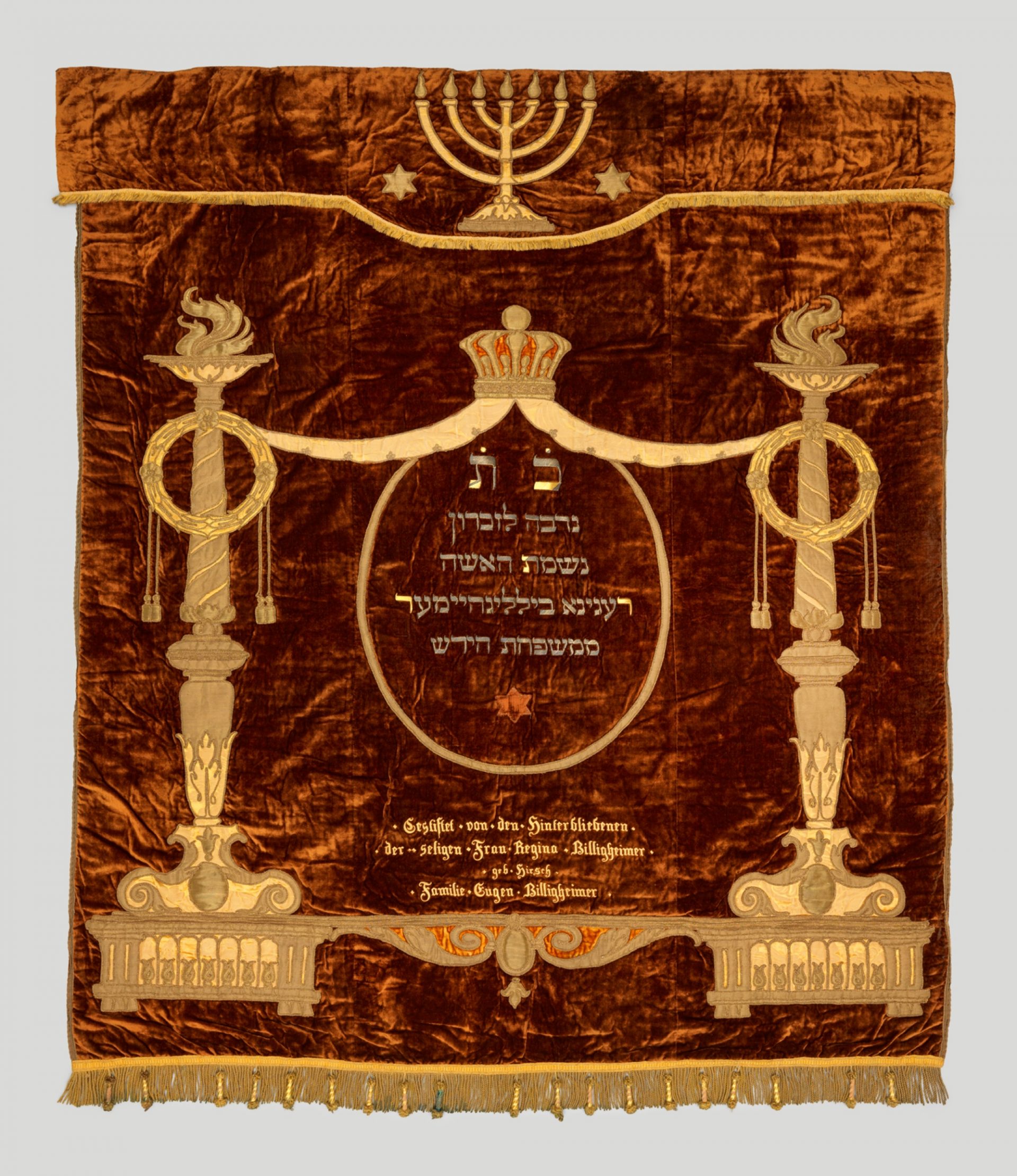
Torah curtains (parochet) are textiles that cover the shrine (Aron haKodesch) in which the Torah scrolls are kept in the synagogue. Often artistically embroidered, they also contribute to the aesthetic design of the synagogue interior. As can be seen from an embroidered golden inscription on brown-red velvet, this richly decorated parochet was donated around the year 1900 by Eugen Billigheimer in memory of his late wife Regina Billigheimer, née Hirsch. However, the inscription did not reveal where the Torah curtain was originally used or how it entered the museum’s collection.
Christian Porzelt visited archives, looked through historical photographs, and combed through files until he was finally able to solve the puzzle of the Torah curtain’s origin. The decisive clue was provided by a letter. In the archives of the Jewish Community of Swabia-Augsburg (IKG Schwaben-Augsburg), a correspondence from a Jew from Altenstadt written in 1965 was discovered. In it, the man, who had managed to flee Germany in the 1930s, asked the Jewish community in Augsburg whether any items from the synagogue in his hometown might still be preserved there: “I was once told that your esteemed community might be in possession of a few items, including a Torah curtain made of heavy brown plush with lemon-yellow borders bearing the name of the Billigheimer family, etc.” Thanks to this information, the Torah curtain with its inscription could be clearly attributed to the Billigheimer family, who had personal memories associated with the Altenstadt synagogue.
Regina Hirsch was born in Altenstadt an der Iller in 1844. In 1868, she married Eugen (Isaak) Billigheimer in the synagogue of her hometown. After the wedding, the couple lived in Würzburg, where their five children were born. Eugen Billigheimer was a merchant and founded the “Erste Würzburger Möbelfabrik” (First Würzburg Furniture Factory) in 1873, which employed around 100 workers just five years after its founding. In 1887, Eugen and Regina Billigheimer moved to Frankfurt am Main. Regina Billigheimer died there on January 28, 1898. The inscription on the Torah curtain suggests that it was commissioned by her husband shortly after her death. Eugen Billigheimer probably donated the Torah curtain to the synagogue in Altenstadt, as Regina Billigheimer came from Altenstadt and the couple had married there. He died twelve years after his wife in 1911 in Frankfurt am Main.
Christian Porzelt also discovered that the Torah curtain had been confiscated by the Nazis in Altenstadt on November 10, 1938, along with other ritual objects. The Nazis then handed over the Torah curtain to the State Archives in Neuburg an der Donau, where it was kept until the end of World War II. This ensured the object’s survival, as many other Jewish ritual objects were destroyed during the pogroms of November 1938 or afterwards.
In 1946, it was returned to the “Israelitische Kultuszentrale Schwaben” (Israelite Religious Community of Swabia), the predecessor institution of today’s IKG Schwaben-Augsburg. Historical photographs also made it possible to reconstruct that the Torah curtain in question was used in the post-war period in the weekday synagogue of the IKG Schwaben-Augsburg. A photo taken at the museum’s opening in 1985 shows the Torah curtain in the exhibition room of the Jewish Museum. In this way, the history of the object was reconstructed step by step with the help of many small clues.
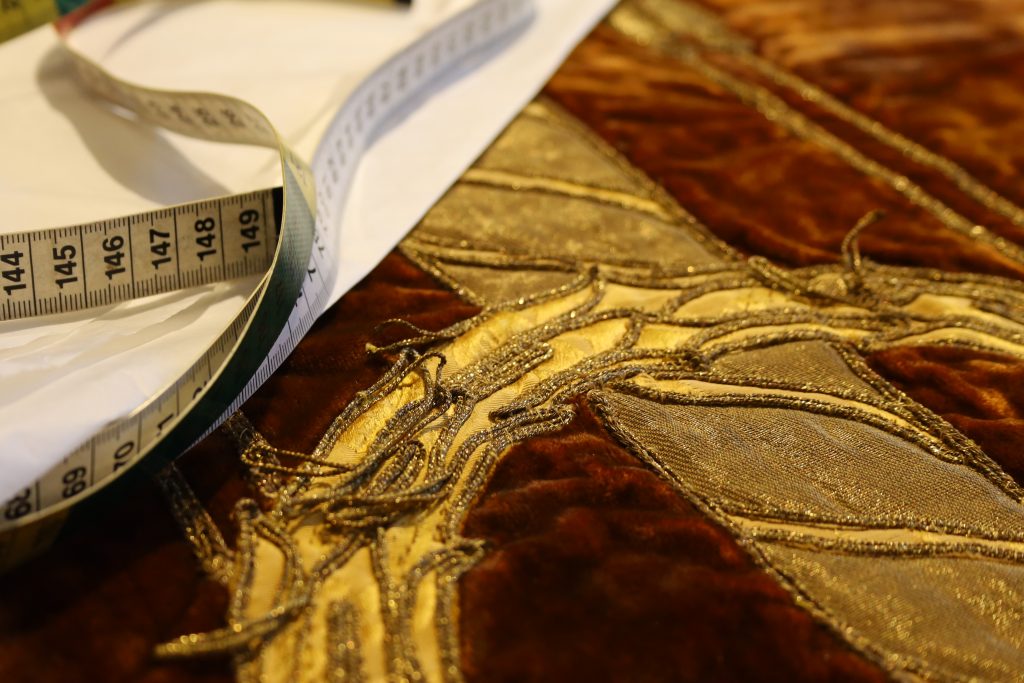
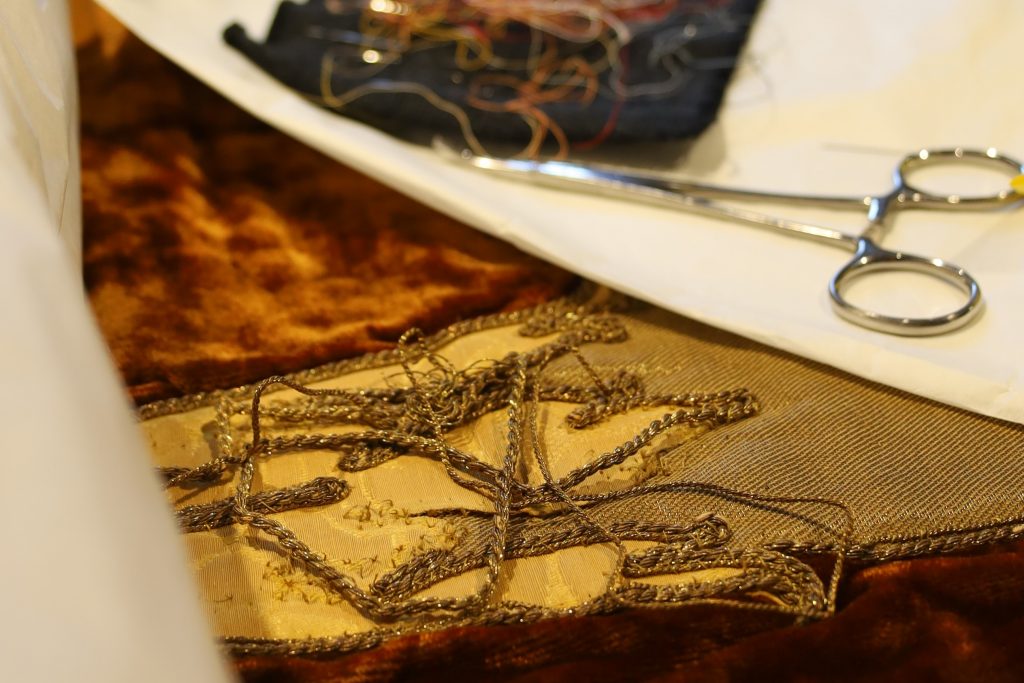
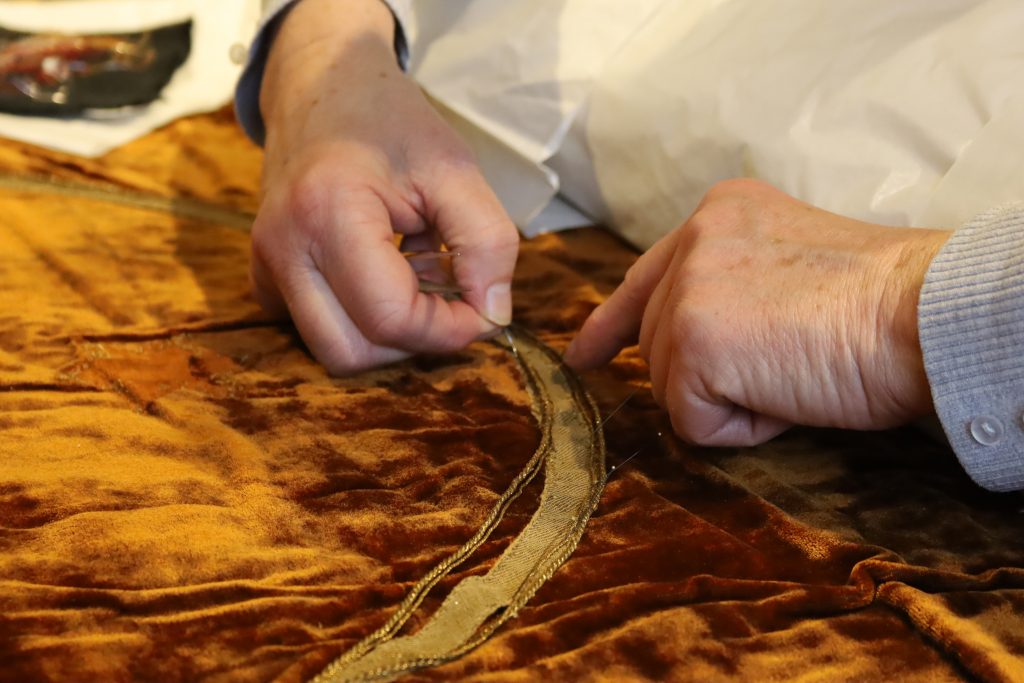
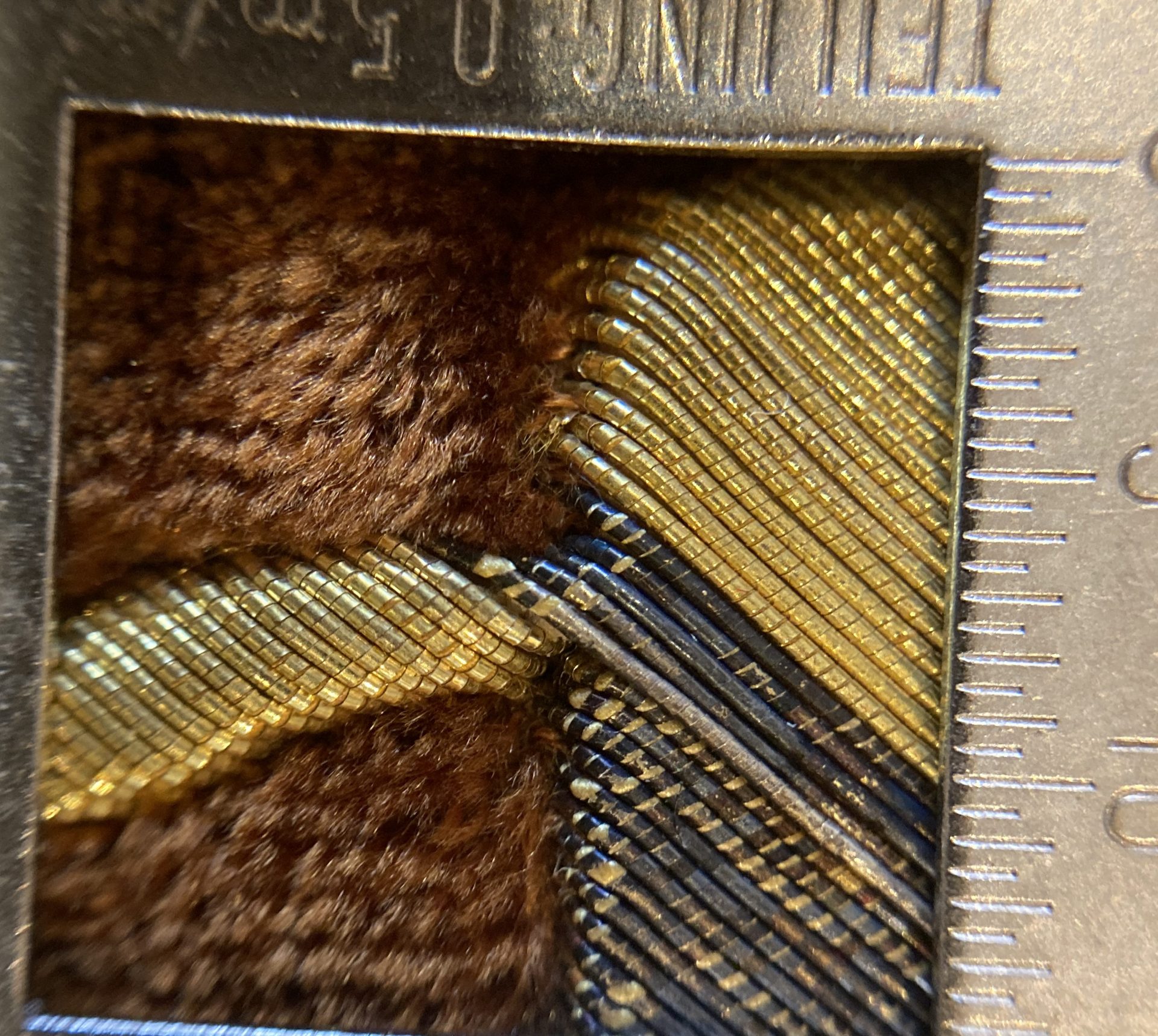
In 2025, conservation measures were carried out to secure the delicate material. The curtain, made of brown-red silk velvet and yellow silk damask, showed age-related damage, particularly to the metal thread embroidery and fringes. The loose cords and trims were carefully reattached by hand to preserve the textile for the future.
November 2025